Which school capital funding can actually pay for solar panels
We are not a Department for Education funding authority and this is not a general explainer on school capital funding. It is a narrower question: of the capital a school or its responsible body already holds, which of it can lawfully be spent on a rooftop array, and on what timetable. Devolved formula capital is usually the answer, School Condition Allocations sometimes are, the Condition Improvement Fund almost never is, and the decarbonisation schemes have closed. Every line below carries its DfE or Salix source and the date we checked it.
Contents
Where school capital funding comes from in 2026 to 2027
School capital funding in England reaches a school through three routes, devolved formula capital paid to the institution, School Condition Allocations paid to a responsible body, and Condition Improvement Fund awards paid against a named project, and only the first of those is money the school itself decides how to spend.
That three way split decides almost everything about how a solar project gets paid for. The gov.uk school capital funding guidance sets out over £2.1 billion committed for 2026 to 2027 to improve the condition of the school estate, and none of it is labelled for renewable energy. What matters is not whether a fund is called a green fund, but which body holds the allocation and what the conditions of grant let them do with it.
The honest headline is that the pot most likely to buy your panels is the one you already hold. Devolved formula capital is a modest annual figure, it runs for three financial years rather than one, and the department's own spend guidance describes it as funding for schools to address their own priorities including contributing to a larger capital project. Two or three years of DFC, or several schools in a trust pooling theirs, is a real route. Waiting for a grant labelled solar is not.
What follows is scheme by scheme: who each one is open to, what the conditions of grant allow, whether solar qualifies, and where the window currently stands. We have checked each against the department's or Salix Finance's own page rather than against a summary, because two of the schemes people still ask about have closed and one of them has closed for good.
Every pot, and whether an array can come out of it
| Funding | Who it is paid to | What it gives | Covers solar PV | Where the window stands | Source |
|---|---|---|---|---|---|
| Devolved formula capital (DFC) | Every eligible school and institution individually. Local authorities receive it for their maintained schools and must pass it on; academy trusts, VA bodies and other institutions receive it from the DfE | A fixed sum plus a variable amount on weighted pupil numbers, for the school to spend on its own priorities | Yes, as capital spend the school chooses | Single payment in June, usable across three financial years | DfE, Condition funding methodology and spend guidance 2026 to 2027 |
| School Condition Allocations (SCA) | Local authorities, non-maintained special schools and eligible special post-16 institutions automatically. Academy trusts and VA bodies only above the size threshold | Condition funding held by the responsible body, prioritised across its estate | Only within the stated purpose, which names improving environmental sustainability | Nine instalments May to January for local authorities, four May to August for academy trusts | DfE, Condition funding methodology and spend guidance 2026 to 2027 |
| Condition Improvement Fund (CIF) | Single and small academy trusts, CIF eligible VA bodies and sixth form colleges, which do not receive directly paid SCA | Competitive bidding for named projects, scored against published priorities | Not a listed priority. Energy efficiency work without a high condition need scores low | 2026 to 2027 round closed 16 December 2025, outcomes 22 May 2026. No 2027 to 2028 round announced | DfE, Condition Improvement Fund 2026 to 2027 information for applicants |
| Public Sector Decarbonisation Scheme (PSDS) | Public sector bodies in England including schools and academies, through Salix Finance for the Department for Energy Security and Net Zero | Grant for low carbon heating, with efficiency measures alongside it | Only in a building served by a PSDS funded low carbon heating source | Phase 4 closed 25 November 2024. No further investment committed beyond awarded projects | Salix Finance, Phase 4 project criteria; DfE, CIF 2026 to 2027 information for applicants |
| Low Carbon Skills Fund (LCSF) | Public sector organisations, through Salix Finance | Specialist advice to build a heat decarbonisation plan, not capital works | No, it never bought equipment | Phase 5 closed. No funding in financial year 2025 to 2026 | Salix Finance, Public Sector Low Carbon Skills Fund |
| Great British Energy Solar Partnership | Schools and colleges selected by the Department for Education, not applicants | Government funded panels, and from 2026 a privately funded pilot in three regions | Yes, and only solar | 245 schools and colleges installed, 100 more announced 16 July 2026 | gov.uk, government solar drive news release, 16 July 2026 |
| Renewal and Retrofit Programme | Schools and colleges selected by the Department for Education on condition need. Not open to bids | Condition and decarbonisation works, with solar photovoltaic panels named in the phase one scope | Yes, where sites are suitable | £710 million to 2029 to 2030. Phase one from 2026 to 2027 in three regions | gov.uk, Renewal and Retrofit Programme, published 15 June 2026 |
All checked 22 September 2026. Allocations, thresholds, rates and windows change every financial year. Verify against the source before you commit a budget to any of it.
What is devolved formula capital and can it be spent on an array?
Devolved formula capital is direct capital funding allocated by the Department for Education to individual institutions to maintain their buildings and fund small scale capital projects, and the school decides how to use it.
That last clause is the whole reason this page starts here. With Condition Improvement Fund money the funding must be spent on the project detailed in the approved bid. With School Condition Allocations the responsible body prioritises across its estate. With DFC, in the department's own words, all schools can decide individually how to use the capital funding, although DFC may also be pooled by a responsible body with the agreement of the individual schools.
The spend guidance describes DFC as capital funding intended for schools to address their own priorities, such as improvements to buildings and other facilities, including ICT, capital repairs and refurbishment and minor works, or contributing to a larger capital project to improve condition. A rooftop array is a capital improvement to a building. It sits inside that description without needing anyone's permission, which is not something that can be said of any other line in the table above.
The limits are worth stating precisely. DFC is not to be used for small value items including books, training materials, IT equipment and consumables, or for services such as IT support packages and warranties. For local authority maintained schools the grant conditions say it may only be used for the same purposes as a capital receipt under section 11 of the Local Government Act 2003. Neither restriction touches a fixed array on a roof.
Local authorities receive the DFC payments for their maintained schools and are required to pass those allocations on. Academy trusts, voluntary aided bodies and other institutions receive their DFC from the DfE directly. Local authorities cannot vary the formula between their schools, for instance to take account of cash balances, because DFC is intended as a school level allocation and should be distributed in accordance with the published allocations. All of this applies to England, and eligible responsible bodies can view their own DFC allocations through the department's Manage your education estate service.
How the DFC allocation is calculated
Every eligible institution is allocated a fixed sum of £4,000 and a variable amount based on weighted pupil numbers. The DFC base rate for 2026 to 2027 is £11.25, and voluntary aided schools have a further factor of 1.08 applied. Pupil numbers come from the 2025 spring school census, or the 2024 to 2025 individualised learner record for post-16 institutions.
(£4,000 + £11.25 x weighted pupils) x VA factor
- 50 primary at 1.0 plus 500 secondary at 1.5 gives 800 weighted pupils
- 800 x £11.25 gives £9,000 of variable funding
- plus the fixed £4,000 gives a total allocation of £13,000
- x 1.08 if voluntary aided gives £14,040
When it arrives and how long it lasts
DFC is a single payment in June. The time limit set out in the department's payment tables is three financial years, with year one being the year the payment is made. That window is the most useful and least understood feature of the allocation: an allocation paid in June 2026 is still available in the 2028 to 2029 financial year, so three years held together buy something a single year does not. The practical version of that is a school deciding in 2026 that it wants an array in 2028, and spending the intervening time on the survey and the connection rather than on an application.
There is no requirement to sign terms and conditions for DFC. For academies, DFC spending forms part of the trust's annual audited accounts, and the Academies Accounts Direction sets out how academies should account for government grants. The department does not require academies to provide separate spending information on DFC. Where a school converts to academy status during the financial year, any unspent allocation including the carried forward element should follow the school.
One condition catches closing schools. To be eligible for SCA, CIF and DFC an institution must appear on the spring 2025 census or the 2024 to 2025 individualised learner record and still be open, or have a successor still open, at the start of April 2026. An institution that closes with no successor after that point attracts SCA for its responsible body one final time, but to receive DFC the institution must still be open at the point of payment, because DFC is an institution level allocation.
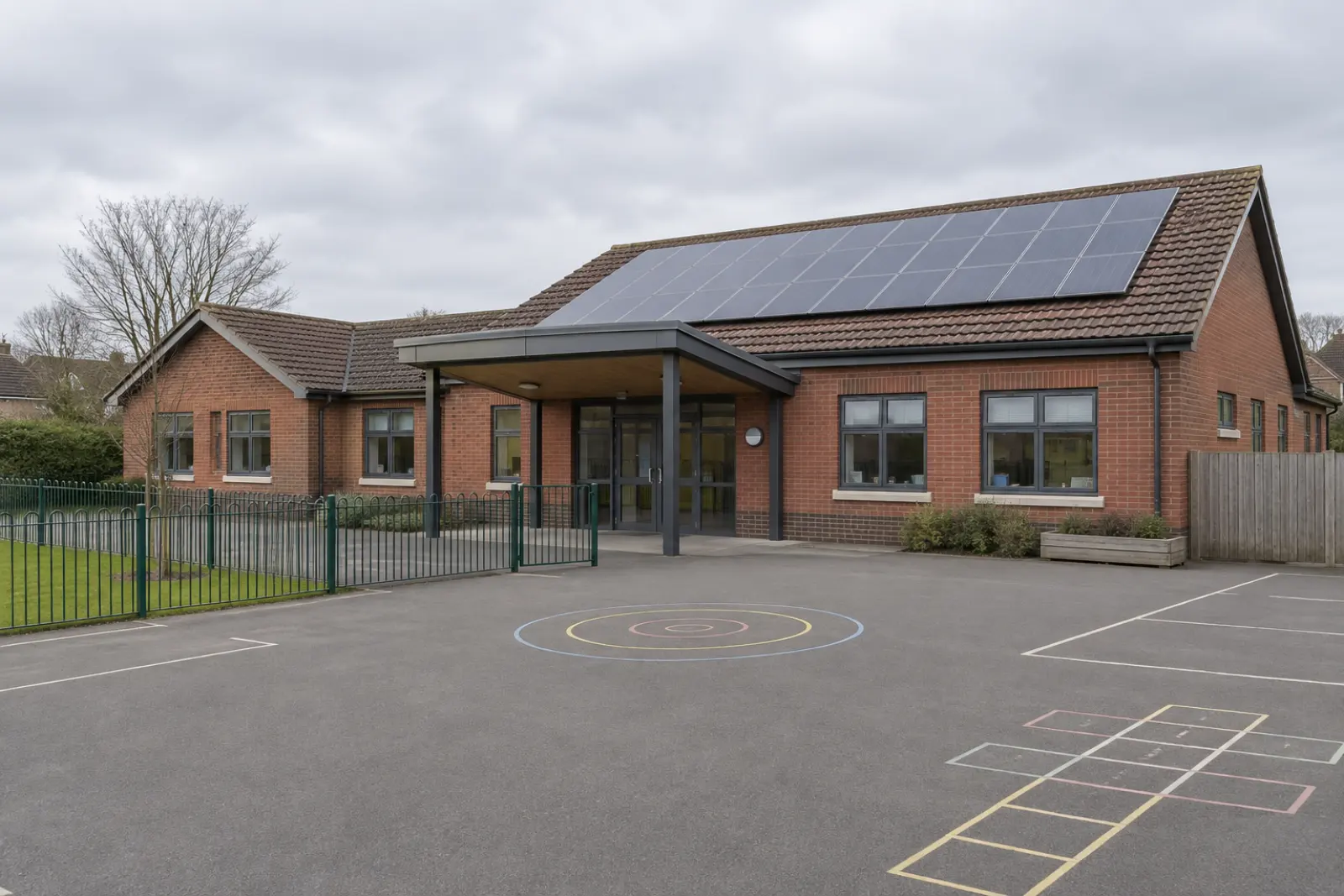
Where School Condition Allocations fit for a trust or a local authority
School Condition Allocations are condition funding paid directly to a responsible body, a local authority, a large academy trust, a large voluntary aided body or a non-maintained special school proprietor, for it to prioritise across every institution it is responsible for.
The eligibility test is a size threshold rather than a judgement. Local authorities, non-maintained special schools and eligible special post-16 institutions are automatically eligible. Academy trusts and voluntary aided bodies must have met both criteria: the body had five or more open schools at the start of September 2025, and those open schools or their predecessors had at least 3,000 pupils counted in the spring 2025 census or the 2024 to 2025 individualised learner record. Pupils in special and alternative provision settings are multiplied by 4.5 for that count.
The department notified eligible academy trusts and VA school bodies in autumn 2025, and its guidance is explicit that eligibility should not be assumed unless it has been confirmed. There is no opting in or out: a trust below the threshold cannot choose SCA over the Condition Improvement Fund, because enrolment in SCA is based on a size threshold and is automatic.
Whether an array can come out of SCA turns on the stated purpose, and the wording repays reading. Investment must be prioritised on keeping school buildings safe and in good working order by tackling poor building condition, building compliance, and health and safety issues, and improving environmental sustainability. That final clause is the only place in the whole condition funding regime where sustainability appears as a purpose rather than as an encouragement, and it sits fourth in a list that begins with safety. A trust treating solar as part of a condition programme is on defensible ground. A trust treating it ahead of a failing roof is not.
The same guidance tells responsible bodies to consider any wider government support for decarbonisation when developing their investment plans. In September 2026 that is a thinner instruction than it sounds, for the reasons set out in the decarbonisation section below.
How the SCA formula works, and why condition data decides it
The formula is the per pupil funding rate multiplied by weighted pupils, the SCA condition band, a location factor, and where they apply a VA factor, a PFI factor and a funding floor. The condition band is the part schools tend not to know about: it is set from the Condition Data Collection programme, with relative condition need calculated as the sum of need graded B, C or D divided by gross internal floor area. A school in relatively poorer condition attracts a higher funding rate than one in relatively better condition. For the 2026 to 2027 round the department used CDC2 data where reports had been issued by 30 November 2025.
That matters to a solar decision in an uncomfortable way. A school whose condition data is good attracts less condition funding and is the better candidate for an array, because its roofs have life in them. A school whose condition data is poor attracts more and should be spending it on the roof rather than on what goes on top of it. Our roof survey exists to tell you which of those two you are before anybody quotes for panels.
Payment timing differs by body type and is worth knowing if you are programming works. Local authorities receive SCA in nine equal instalments from May to January. Academy trusts receive it in four equal instalments from May to August. Non-maintained special schools receive a single payment in May, with the time limit running to 31 March of the financial year the grant is paid.
Can the Condition Improvement Fund pay for solar panels?
The Condition Improvement Fund is an annual competitive bidding round run by the Department for Education for single and small academy trusts, CIF eligible voluntary aided bodies and sixth form colleges, and solar generation does not appear in any of its published project priorities.
We would rather say that plainly than let a school spend a term on a bid. CIF's core priority is to support condition projects and to keep buildings safe and in good working order. The highest priority category covers building safety, emergency and managed asbestos removal, gas safety, electrical safety, water services and drainage, ventilation and overheating where learning is demonstrably affected, fire safety, and the critical replacement of coal fired heating with low carbon alternatives where there is a risk of school closure. High and medium priority cover life expired condition replacement. Low priority covers functional areas below current standards. Nothing in any band is a generation project.
The applicant guidance goes further and closes the obvious workaround. It expects applicants to consider energy efficient and environmentally sustainable options when replacing components, and then says that works to improve energy efficiency, such as lighting projects, which do not involve works to address high need condition issues, are unlikely to be successful in receiving CIF funding because they have a lower priority. An array bolted onto a bid is not a condition need.
Where CIF genuinely does help a solar project is indirect and worth planning around. A successful roof covering bid puts a scaffold up, renews the substrate and resets the clock on the fabric. A successful electrical systems bid renews the distribution board the inverters would connect to. Neither pays for panels, and both make the panels cheaper and safer to add out of devolved formula capital afterwards. That sequencing is the realistic use of CIF in a solar plan.
The 2026 to 2027 round, in numbers the department published
The round launched on 21 October 2025 with the information for applicants and the online application window. New applicants had to register a portal account by 12 noon on 9 December 2025 and submit with all supporting documents by 12 noon on 16 December 2025. Outcomes were announced on 22 May 2026, with an appeal window opening in June 2026 and appeal outcomes published in July 2026. The department provided over £450 million for the programme, 3,925 academies, sixth form colleges and voluntary aided schools were eligible to apply, 1,706 applied for 2,525 projects, and 813 projects at 684 establishments were funded. All CIF projects must complete by 31 March 2028.
Read those numbers as a probability rather than as a fund. Roughly a third of the projects put forward were funded, and they were the ones addressing compliance and life expired condition with a risk of closure. A school whose real position is that its roof is sound and its electrics are fine has a weak CIF bid by design, which is exactly the school that should be looking at its own devolved formula capital instead.
CIF is being replaced, which changes how a trust should plan
The Education Estates Strategy, published on 16 February 2026, says responsible bodies have told the department that the Condition Improvement Fund process can be burdensome and does not allow them to plan sufficiently, and that the department is introducing a new programme from autumn 2028 to replace CIF so that they no longer need to submit full bids. Bodies currently eligible for CIF will receive their capital maintenance funding through that new programme instead.
That matters to a solar decision in a way a condition decision would not. A trust that has been treating its estate plan as a series of annual bids has been planning in one year steps, which is precisely the horizon on which an array never gets funded. A trust that will receive an allocation rather than bid for one can plan a roof programme across several years and put panels on the decks it renews. We would not delay a scheme waiting for 2028, but we would stop writing estate plans that assume the only way to fund anything is to win a bid.
Sources: DfE, Condition Improvement Fund 2026 to 2027 information for applicants; gov.uk, Condition Improvement Fund 2026 to 2027 outcome; DfE, Education Estates Strategy, 16 February 2026. All checked 22 September 2026.
What happened to the Public Sector Decarbonisation Scheme and the Salix funds
The Public Sector Decarbonisation Scheme is a grant scheme delivered by Salix Finance on behalf of the Department for Energy Security and Net Zero, its Phase 4 window closed on 25 November 2024, and the government has committed no further investment beyond the projects already awarded.
We state it that bluntly because a great deal of school solar marketing still points at PSDS. The Condition Improvement Fund applicant guidance published in October 2025 says it directly: following the 2025 Spending Review, the government has made the decision to commit no further investment for the PSDS beyond currently awarded projects. There is no Phase 5. Nothing has replaced it.
It is also worth being accurate about what PSDS funded while it ran, because the scheme was never a solar grant. Phase 4 was aimed at low carbon heating, and the building being treated had to have a heating plant coming to the end of its useful life at ten years or older. Energy efficiency and fabric measures, which is the category solar panels sat in, were only eligible for funding if they were installed in a building served by a Public Sector Decarbonisation Scheme funded low carbon heating source. A school asking PSDS for panels alone would never have qualified. A school replacing a dying gas boiler with a heat pump could add them.
Phase 4 launched in September 2024, the portal opened at 2pm on Wednesday 9 October 2024 and closed at 2pm on Monday 25 November 2024, and it makes capital funding available across financial years 2025 to 2026 through 2027 to 2028, with projects completing by 31 March 2028. Schools and academies are named among the eligible public sector bodies. If your trust holds an award, it is live. If it does not, there is no queue to join.
The Low Carbon Skills Fund, the companion Salix scheme that paid for the specialist advice behind a heat decarbonisation plan, is in the same position. Phase 5 provided up to £16 million for the 2024 to 2025 financial year and is closed for applications, and the Salix page states that there will be no funding for the Low Carbon Skills Fund in financial year 2025 to 2026. It never funded capital works in any case: it bought the expertise to write the plan, not the plant.
What replaced them, and what did not
Nothing has replaced the Public Sector Decarbonisation Scheme as a route a school can apply to for decarbonisation capital. What does exist is central government spending that reaches schools by selection rather than by application, and there are now three strands of it: the Great British Energy Solar Partnership, the power purchase agreement pilot announced on 16 July 2026, and the Renewal and Retrofit Programme published on 15 June 2026.
The third of those is the one a finance director should know about, because solar is named in its published scope. It is backed by £710 million to 2029 to 2030, its phase one from 2026 to 2027 covers schools and colleges in Yorkshire and the Humber, the East Midlands and the South East, and its phase one interventions include installing solar photovoltaic panels where sites are suitable. The guidance is explicit that the programme is not open to bids and that schools and colleges are selected by the department based on condition need, which is the same basis the power purchase agreement pilot uses. We cover all three properly on our solar panels for schools grants page, including what the power purchase agreement route actually costs a school over its term.
For a school or trust without an award and without an invitation, that leaves the capital it already holds. That is not a consolation prize. Devolved formula capital held across three financial years, pooled across a trust where the schools agree, aimed at roofs that a survey says are sound, funds real arrays on real buildings without a bid, an award letter or a deadline.
Working out which funding your school can realistically use
Eligibility for school capital funding turns on what kind of body you are, what your condition data says, and whether the roof has enough life left to carry an array for its full working life.
The two sides below are drawn from the published DfE guidance and the CIF priorities rather than from general principles. Read them as a filter to apply before anyone quotes, not as a promise.
- You have devolved formula capital allocated this financial year, or carried forward from the two before it, and no higher condition priority is competing for it
- Your trust or local authority receives School Condition Allocations and is willing to treat environmental sustainability as part of the condition programme it already runs
- Roof covering or electrical work is already funded and programmed, so the array is an addition to an access scaffold and a distribution board that are being paid for anyway
- Several schools in your trust or authority agree to pool their devolved formula capital, which the guidance expressly allows with the schools' agreement
- The roof needs replacing first, because a condition need outranks a generation project in every set of published priorities and an array on a failing roof gets removed
- You are waiting on a Condition Improvement Fund award for the panels themselves, which is not a CIF priority in any category
- You expected the Public Sector Decarbonisation Scheme to fund standalone solar, which its project criteria have never done
- The school has been announced for the School Rebuilding Programme and the block in question is due to be replaced
The sequencing point deserves its own line, because it is where most school solar money is wasted. An array has a working life measured in decades and a roof covering does not. Putting panels on a covering with a few years left means paying twice to take them off and put them back, and the second payment comes out of a capital budget that will be no larger then than it is now. The order is survey, then roof, then array. Our cost page sets out what each stage carries.
Why capital allowances do not work for a school the way they work for a company
Capital allowances are a relief against taxable trading profits, an academy trust is a charitable company that is not carrying on a trade in its core educational activity, and a maintained school is not a separate taxable entity at all, so the relief a commercial solar quote is built around does not arrive.
This is the single most common piece of imported nonsense in school solar proposals. The commercial pitch runs: solar is an integral feature, integral features go into the special rate pool, the Annual Investment Allowance covers special rate expenditure, therefore a large slice of the capital cost comes back through the corporation tax computation. Every step of that is true for a haulage firm. None of it produces anything for a school that is not paying corporation tax on trading profits in the first place.
We are not a tax adviser and your auditor is the person to confirm your trust's position, including any genuinely trading subsidiary it operates, such as lettings run through a separate company. What we will say is that a proposal presenting tax relief as part of the return on a school array has been written for a different customer and should be sent back for a version with the relief taken out. The numbers underneath usually look considerably less attractive once it is.
VAT is the part that does work, and it works through a refund scheme rather than through the ordinary input tax rules. Academies in England reclaim the VAT incurred on purchases relating to their non-business activities under section 33B of the Value Added Tax Act 1994. For a local authority maintained school, expenditure from the delegated budget is treated as the local authority's, and the authority recovers the VAT under section 33. Neither is automatic in every case and mixed use, lettings and partly exempt positions need proper advice, but the headline is that VAT on a school array is usually a cash flow question rather than a cost.
Devolved formula capital is spendable across three financial years from the year of payment, which is not drawn here because it runs off the right hand edge of the axis twice over.
How we would sequence a solar scheme around the funding calendar
A school solar project is decided by the condition of the roof and the capacity of the supply, and the funding question is answered last, because the survey is what tells you whether there is a project at all.
We survey the buildings, establish what each roof can carry and what is genuinely usable once rooflights, plant and shading come out, check the incoming supply and the metering, and model generation against the school's own half hourly consumption across the year rather than as an annual total. A school's load profile is unusual and it matters: the generation peaks in August when the building is empty. That produces a capital cost, a split between energy displaced and energy exported, and a payback you can put in front of a finance and resources committee. The roof survey carries no fee and it is the document the school keeps, whoever ends up installing.
From there the funding conversation is short, because the survey has already answered it. A sound roof, three years of devolved formula capital and a trust willing to pool is a scheme. A roof with five years left is a roof project first. A school in a Great British Energy region waiting for a Department for Education letter should still get the survey done, because the pilot uses the department's own selection criteria and nobody has ever been disadvantaged by knowing what their own roofs can take.
Lenzie Consulting Ltd arranges the survey, the design and the installation through an MCS-certified partner. We are not authorised or regulated by the Financial Conduct Authority and we do not give financial, tax, legal or funding advice. We are not grant agents, we do not submit bids, and we are not a Department for Education funding body. Schools and trusts should check every allocation against the department's own guidance and take their own professional advice before committing capital.
Find out what your roofs can carry before you commit the capital
Send the postcode and a rough idea of the site. We come back with what each roof can take, what it would generate against the school's own consumption across the year, and what the capital cost looks like, so the funding conversation starts from a number rather than a brochure.
No survey fee and no obligation to proceed.
Questions about school capital funding and devolved formula capital
- What can devolved formula capital be used for?
- The DfE guidance says all schools can decide individually how to use the capital funding, and describes DFC as capital funding intended for schools to address their own priorities, such as improvements to buildings and other facilities, including ICT, capital repairs and refurbishment and minor works, or contributing to a larger capital project to improve condition. A rooftop solar array is a capital improvement to a building, so it falls inside that description. The guidance rules out small value items such as books, training materials, IT consumables and service contracts, and for local authority maintained schools the grant may only be used for the same purposes as a capital receipt under section 11 of the Local Government Act 2003. Source: DfE, Condition funding methodology and spend guidance 2026 to 2027, checked 22 September 2026.
- How much devolved formula capital does a school get in 2026 to 2027?
- The published formula is (£4,000 + £11.25 x weighted pupils) x VA factor. Every eligible institution gets the fixed £4,000, the DFC base rate for 2026 to 2027 is £11.25 per weighted pupil, and voluntary aided schools then have a factor of 1.08 applied. Weighted pupils are not headcount: nursery and primary count as 1.0, secondary as 1.5, post-16 as 2.0, and special, pupil referral unit, alternative provision and boarding pupils as 4.5, because floor area per pupil differs by setting. The department's own worked example is a school with 50 primary and 500 secondary pupils, giving 800 weighted pupils, £9,000 of variable funding, £13,000 in total, and £14,040 if it is voluntary aided. Pupil numbers come from the 2025 spring school census or the 2024 to 2025 individualised learner record. Source: DfE, Condition funding methodology and spend guidance 2026 to 2027, checked 22 September 2026.
- When is devolved formula capital paid, and can it be carried forward?
- DFC is a single payment in June. The time limit in the payment tables is three financial years, with year one being the year the payment is made, so an allocation paid in June 2026 can still be spent in the 2028 to 2029 financial year. That three year window is what makes DFC usable for something larger than a minor works job: two or three allocations held together buy an array that one will not. There is no requirement to sign terms and conditions for DFC, though for academies the spending forms part of the annual audited accounts under the Academies Accounts Direction. If a school converts to academy status mid year, any unspent DFC including the carried forward element should follow the school. Source: DfE, Condition funding methodology and spend guidance 2026 to 2027, checked 22 September 2026.
- Is my academy trust eligible for School Condition Allocations?
- An academy trust or voluntary aided body receives directly paid SCA only if it met both published criteria: the body had five or more open schools at the start of September 2025, and those open schools or their predecessors had at least 3,000 pupils counted in the spring 2025 census or the 2024 to 2025 individualised learner record. Pupils in special and alternative provision settings are multiplied by 4.5 for that eligibility count, so a trust with 1,000 special school pupils counts as 4,500. Local authorities, non-maintained special schools and eligible special post-16 institutions are automatically eligible. The department notified eligible bodies in autumn 2025 and its guidance says eligibility should not be assumed unless it has been confirmed. Everyone below the threshold bids into the Condition Improvement Fund instead. Source: DfE, Condition funding methodology and spend guidance 2026 to 2027, checked 22 September 2026.
- How much funding does a school get for a SEN child?
- In the capital funding this page deals with, a pupil in a special school, pupil referral unit or alternative provision setting is weighted at 4.5 against 1.0 for a primary pupil, in both the devolved formula capital calculation and the School Condition Allocations formula. The department's stated reason is that these schools tend to have lower pupil numbers for their size and more complex facilities. That weighting is also applied to the pupil count that decides whether a trust clears the 3,000 pupil SCA threshold. Revenue funding for pupils with special educational needs is a separate system, paid through the local authority's high needs block rather than through the capital allocations here, and the gov.uk high needs funding pages are the place to read it. Source: DfE, Condition funding methodology and spend guidance 2026 to 2027, checked 22 September 2026.
- Are academies profit making?
- No. An academy trust is a charitable company and an exempt charity. It has no shareholders, it cannot distribute a surplus, and any surplus it holds stays in the trust for the benefit of its schools. That is not a technicality when a solar quote arrives, because most of the financial arguments made for commercial solar assume a company paying corporation tax on trading profits and claiming capital allowances against them. A trust is not in that position on its core educational activity and neither is a maintained school, which is not a separate taxable entity at all. The saving a school makes on an array is the energy it stops buying, not a reduction in a tax bill, and any quote built on tax relief has been written for a different kind of customer.
- How much money does a school get for a pupil premium child?
- Pupil premium is revenue funding, allocated annually by the Department for Education at rates it publishes each year, and it is not capital. It cannot buy a solar array, a roof or a boiler, and the two budgets are kept separate for good reason. The capital equivalent of that question is devolved formula capital, which is the per institution allocation covered at the top of this page and is calculated on weighted pupil numbers rather than on disadvantage. If you want the current pupil premium rates, the gov.uk pupil premium allocations page carries them and changes each financial year, which is why we do not restate a figure here.
- Can a school use devolved formula capital as its contribution to a larger scheme?
- Yes, and the guidance names it. DFC is described as funding for schools to address their own priorities including contributing to a larger capital project to improve condition, and it says DFC may also be pooled by a responsible body with the agreement of the individual schools. For a trust running a roof replacement programme, that is the mechanism that gets an array onto a roof at the moment the scaffold is already up. What local authorities cannot do is vary the formula between their schools, for example to take account of cash balances, because DFC is intended as a school level allocation and should be distributed in accordance with the published allocations. Source: DfE, Condition funding methodology and spend guidance 2026 to 2027, checked 22 September 2026.